AI Overviews (formerly known as Search Generative Experience or SGE) are reshaping how people find and engage with content online. With Google rolling out AI-generated overviews in search results, it’s no longer just about ranking #1 — it’s about being summarized. To stay visible, content creators and digital marketers need to rethink how blog posts are structured, formatted, and optimized.
Here’s how you can optimize your blog content to increase the chances of being cited or featured in AI Overviews.
⸻
What Are AI Overviews?
AI Overviews are Google’s way of summarizing answers to search queries using generative AI. When triggered, users sees a synthesized overview of key points from multiple sources — usually above traditional organic results. These summaries often cite websites as sources, offering visibility and traffic opportunities if your content is well-optimized.
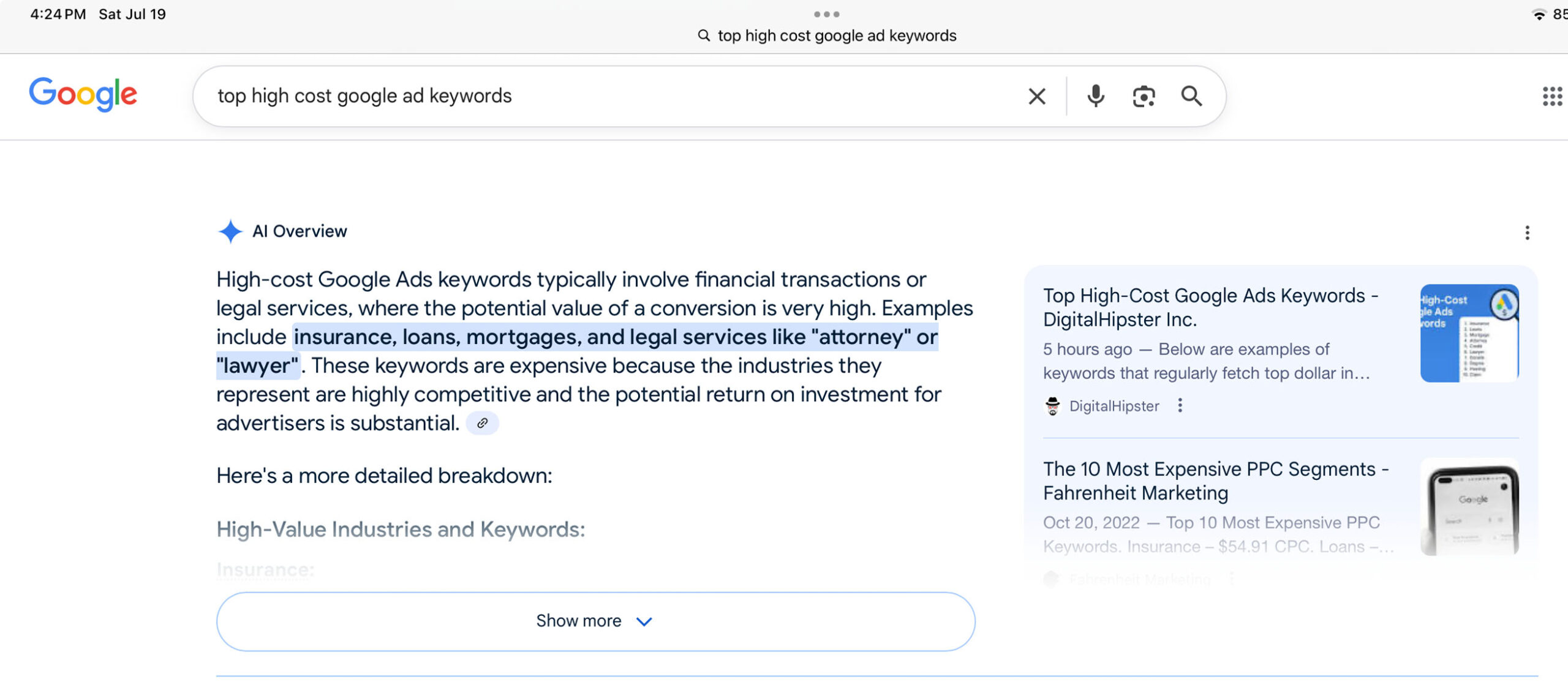
📌 Example: Instead of showing 10 blue links for “How to train a puppy,” Google may now show an AI-generated paragraph summarizing key training steps — linking to 2–4 source sites.
⸻
Why AI Overviews Matter for Bloggers and SEO
• Brand Exposure: Even without the top spot in organic rankings, your blog could be cited in an AI Overview.
• Higher Click Potential: When cited, your content may receive high-quality traffic from users already primed for your insights.
• New SEO Battleground: Traditional keyword rankings are no longer the only metric. Visibility in AI Overviews is now a key content goal.
⸻
1. Focus on Clear, Structured Content
Google’s AI models need to understand your content in order to summarize it. This starts with clarity.
Use structured formatting:
• Use H1 for titles, H2/H3 for sections, and short, scannable paragraphs.
• Break up content into lists, bullet points, FAQs, and definition blocks.
• Clearly label sections with keywords like “Step-by-step,” “Benefits,” “Drawbacks,” “Tips,” etc.
💡 Example: Instead of burying the answer in a paragraph, use a heading:
“How Often Should You Water a Snake Plant?” followed by a 2-3 sentence direct answer.
⸻
2. Answer Questions Directly
AI Overviews prioritize content that answers common queries in a concise, straightforward manner.
Tips:
• Use featured-snippet style responses early in your content.
• Include short paragraphs (2–3 sentences) that directly answer the query.
• Add a TL;DR or Summary box at the top of long posts with quick takeaways.
✅ Good: “The best time to post on Instagram is between 9 AM and 11 AM EST on weekdays.”
❌ Too Vague: “Many brands find that mornings work well, but it depends.”
⸻
3. Include Author Expertise and E-E-A-T Signals
Google’s AI prefers content that demonstrates Experience, Expertise, Authoritativeness, and Trustworthiness (E-E-A-T).
How to apply E-E-A-T:
• Add author bios with credentials, especially on health, finance, or legal topics.
• Include real-world examples, case studies, or data-backed insights.
• Link to authoritative sources and relevant internal blog posts.
🧠 Bonus Tip: Use schema markup for articles and authors to reinforce your credibility with AI models.
⸻
4. Use Natural Language and Semantic Keywords
Generative AI understands intent better than keyword stuffing. Your blog should reflect real questions and conversations.
Optimize for semantic relevance:
• Instead of repeating a keyword, use related terms and synonyms.
• Answer related subtopics naturally in the flow of the article.
• Use tools like Google’s “People Also Ask” and AI-powered SEO platforms to find semantically connected questions.
✍️ Example: For a post on “Keto Diet,” include sections like:
• “What Can You Eat on Keto?”
• “Is Keto Safe for Diabetics?”
• “Low-Carb Keto Snack Ideas”
⸻
5. Optimize for Mobile and Fast Load Times
Even if you’re cited in an AI Overview, a slow or messy website can kill conversions.
Quick fixes:
• Use a fast WordPress theme like Astra or GeneratePress.
• Optimize images and enable lazy loading.
• Use caching plugins and a CDN for speed.
⚡ Speed Tip: Run your site through PageSpeed Insights and aim for a score above 90 on mobile.
⸻
6. Monitor and Adapt
AI Overviews are still evolving, so your optimization strategy should too.
Tools to monitor impact:
• Use Google Search Console to check impressions and click-throughs.
• Look for keywords where you used to rank and see if traffic dropped (AI Overviews may be the culprit).
• Experiment with structured content updates and see what improves your citation rate.
🧭 Insight: You may not always see direct referral traffic from AI Overviews, but being listed can boost brand visibility and trust.
⸻
Final Thoughts on AI Overviews
AI Overviews are changing the way people discover content — and that means your blogging strategy needs to evolve, too. By focusing on clarity, direct answers, structured formatting, and trust signals, you increase your chances of being featured in this new layer of search.
As always, SEO isn’t just about keywords — it’s about understanding how people (and machines) read and engage with your content.
⸻
Need help making your blog AI-ready?
DigitalHipster Inc. specializes in next-gen SEO and AI-optimized content strategies. Reach out and let’s future-proof your blog together.